
Messi’s Physical Transformation Over the Years
Introduction:
When someone mentions Lionel Messi, what’s the very first picture that flashes in your mind? Genius footwork, magical goals, and unmatched vision, right? But there’s more to his journey than just natural talent. Messi’s physical transformation over the years is a story of grit, evolution, and strategic effort. It’s not just about how much he’s achieved—but how his body adapted to make those achievements possible.
Just like a sculptor chiseling away at stone to reveal a masterpiece, Messi reshaped himself year after year. Let’s dive into how the little boy from Rosario, Argentina, became the strong, agile, and enduring football icon we know today.
Messi’s Early Physical Challenges
From the beginning, Messi’s size stood out—but not in a good way. As a young boy, he was noticeably smaller than his peers. While his footwork was brilliant, his small stature made it hard to compete physically.
Many wondered: Can someone so small make it in such a physically demanding sport?
Growth Hormone Deficiency (GHD)
At the age of 10, Messi was diagnosed with Growth Hormone Deficiency (GHD), a condition that stunted his growth. This wasn’t just a minor setback—it was a serious challenge that could’ve ended his career before it began.
The treatment? Daily hormone injections that were costly and physically taxing. Imagine being a child and having to inject yourself every night, all for a dream you weren’t even sure would come true.
Moving to Barcelona: The Turning Point
Messi’s life changed when FC Barcelona offered to cover his medical expenses if he joined their youth academy, La Masia. This move wasn’t just a career opportunity—it was a lifeline.
It was here that the physical transformation really began. Under expert supervision, Messi began a journey that would redefine his body and his future.
Early Years at Barcelona: Lean But Quick:
In his teens, Messi’s build was still lean. He wasn’t bulky, but he was lightning-fast. His low center of gravity gave him an edge—he could zip past defenders like a hummingbird dodging raindrops.
While others relied on strength, Messi relied on speed, balance, and timing. And it worked.
Strength Training Begins
By the time Messi broke into the senior squad, it was clear he needed more physicality to survive professional football. That’s when targeted strength training began.
Weights, core training, resistance workouts—it all became part of his routine. But it wasn’t about getting bulky. It was about functional strength—power without losing agility.
Injury Struggles and Recovery Phases:
In his early Barcelona years, Messi struggled with frequent injuries, especially muscular ones. His hamstrings and thighs were particularly vulnerable.
This forced him to not just build strength, but also improve flexibility and muscle balance. Customized rehab and injury prevention routines became a permanent part of his regimen.
Adapting His Body with Age
As Messi entered his 30s, he didn’t try to maintain the same physical profile from his youth. Instead, he adapted. He focused more on recovery, mobility, and endurance.
He’s no longer the sprint-every-minute player he once was. Now, he conserves energy, chooses his moments, and maximizes his impact.
The Role of Diet and Nutrition
In the early 2010s, Messi completely transformed his eating habits. Guided by Italian nutritionist Giuliano Poser, he cut down on processed sugars, red meat, and fizzy drinks.
His diet shifted to include whole grains, seasonal fruits, nuts, and lean proteins. This change helped reduce injuries and kept his energy levels consistent.
Messi’s Agility and Speed Evolution
Who could forget that breathtaking solo run Messi pulled off against Getafe back in 2007? That was peak young Messi—fast, agile, unstoppable. Over the years, while he’s slightly slower, his agility remains top-tier.
He’s replaced youthful bursts with intelligent movement. It’s like watching a master chess player: always one step ahead.
Training Regimen Over the Years
Messi’s training has evolved to match his age and style of play:
Younger Years: Focused on speed, reflexes, and balance. Peak Performance Phase: Focused on building strength, enhancing dribbling skills, and boosting endurance. Later Years: Now it’s about preservation, precision, and strategy.
He also spends a lot of time on ball control drills and mental conditioning, proving fitness isn’t just physical.
Tactical Evolution and Physical Demands
As tactics evolved, so did Messi’s role—and physical demands changed with it. From a right-wing dribbler to a false nine, and later a playmaker, each role required different physical attributes.
His body had to evolve to match a mind that was always strategizing well ahead.
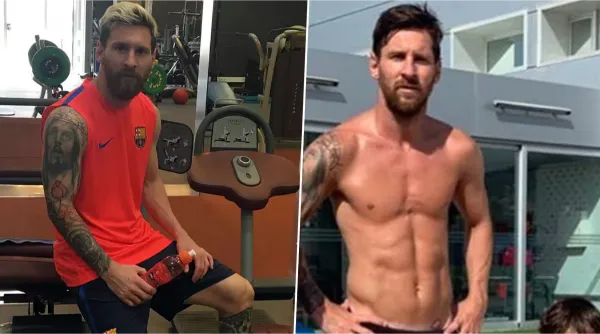
Comparing Messi’s Physique: Then vs. Now
Let’s look at the contrast:
Then: Slim, almost frail, rapid acceleration
Now: Muscular core, broader frame, slower but sharper
If there’s one thing to take away, it’s this: Greatness isn’t born—it’s built, one step at a time.